
Blessed by Mountains: Why the Hardest Paths Lead to the Truest Self
A 2026 reflection on leadership, resilience, and why enduring challenge shapes the leaders who last.
There's a mountain on my horizon as I write this - both literally and figuratively.
I'm in the Scottish Highlands for New Year with family, where mountains are called Munros (over 3,000 ft) and they're all around me. The sort that look imposing from a distance, that makes you question whether you've got what it takes, that you know will demand more than you're currently giving.
Over the years I've learned to be grateful for both types - for the professional, mental and physical challenges which they bring. No mountain is the same and we each tackle them in our own unique way.
If you lead change, transformation, or teams through uncertainty, you already know this truth: the mountains never end. The only question is how you respond to that reality.
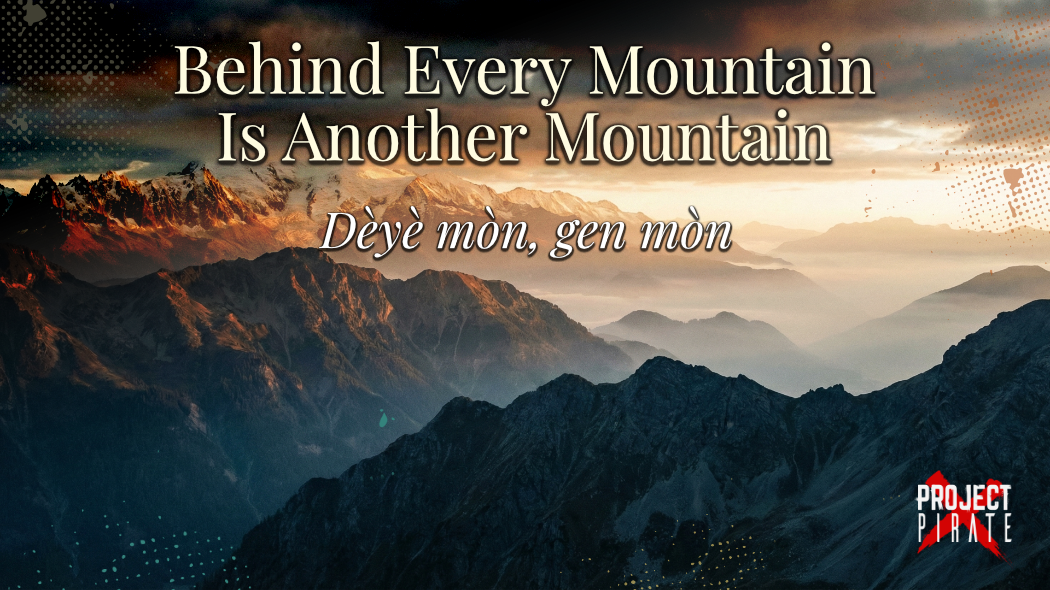
A German professional recently shared a phrase with me: "Behind every mountain is another mountain." I hadn’t heard it before, but it stuck with me because of its profound simplicity.
It's actually Haitian in origin - Dèyè mòn, gen mòn - born from a landscape so rugged that reaching one peak only reveals the next climb ahead. The proverb emerged from genuine hardship and systemic adversity. While I won't pretend to fully understand the depth of that struggle, the proverb offers those of us in leadership a framework for resilience: the recognition that challenges don't end, and that this continuity isn't failure - it’s simply the nature of meaningful work.
Most people hear this phrase and think: exhaustion. An endless slog. Sisyphean futility.
I hear something different entirely.
The Comfort Trap in Leadership
We've built entire careers around the myth of arrival. Get the promotion and you'll be set. Finish this transformation and you can relax. Solve this crisis and smooth sailing awaits.
It's a lie we tell ourselves because the truth is uncomfortable: there is no plateau of permanent ease. There's no "over the mountain" (or over the rainbow) where difficulty ends and comfort reigns.
The traditional German idiom says exactly that- Über den Berg sein "to be over the mountain," meaning the worst has passed. But that's the very delusion that leaves professionals unprepared when the next storm hits.
Because it always hits.
The question isn't whether another mountain awaits. The question is whether you're the kind of person who's grateful for it.
Two phrases; one reflects Resilience. The work continues. The other; Relief. The hard part is done.
If you're honest with yourself, you already know whether you've been avoiding your next mountain. It usually wears sensible language: "timing," "work-life balance," "after this quarter." But avoidance dressed as prudence is still avoidance. The mountain doesn't care about your perfectly reasonable excuses - it just waits, while you grow softer in the lowlands.
Long Legs and Peak-to-Peak Leadership
Friedrich Nietzsche (19th Century German philosopher) understood this deeply. In Thus Spoke Zarathustra, he wrote: (Im Gebirge ist der nächste Weg von Gipfel zu Gipfel: aber dazu musst du lange Beine haben) "In the mountains, the shortest way is from peak to peak: but for that, you need long legs."
This isn't about physical capability or relentless hustle. It's about mental reach and strategic stamina - what Storm-Tested Leadership actually means. Storm-Tested leaders don't seek calm; they recalibrate their identity around leading through uncertainty and navigating volatility. They grow through pressure, not despite it. Where others see adversity as something to endure and escape, Storm-Tested leaders recognise it as the forge that creates capability impossible to develop any other way.
Some professionals traverse mountains by trudging through valleys. They climb one side, descend completely, rest in the valleys, then eventually muster the energy to climb again. Nothing wrong with this path - it's how most careers unfold, and sometimes it's exactly what's needed.
But others develop the "long legs" to move peak-to-peak. They maintain altitude. This doesn't mean they never rest - even mountaineers camp. But they camp at altitude, acclimated to the thin air, ready for the next ridge, rather than retreating to base camp every time things get difficult.
I call this maintaining your Operational Altitude - the heightened state of capability and readiness you choose as your baseline. The difference isn't about avoiding rest. It's about where you set that baseline. Do you return to comfort between challenges, or do you maintain a level of strategic intensity that keeps you sharp?
Storm-Tested leaders understand that: descending to valley comfort between peaks isn't recovery - it's regression. True rest happens at altitude, where you remain acclimated, where your hard-won capabilities don't atrophy, where you're perpetually ready for what's next.
Why Leaders Need the Next Mountain
What I've observed across decades of transformation work: the professionals who plateau aren't the ones who conquered their mountains and found peace. They're the ones who stopped seeking worthy challenges.
They optimised for comfort instead of growth. They chose predictable over meaningful. They picked safe harbours over open water.
And something in them quietly died.
Because the uncomfortable truth is - we're not built for permanent comfort. We're built for challenge, for adaptation, for the discovery of capabilities we didn't know we possessed. The mountains aren't obstacles to our development - they're the mechanism of it.
Think about the moments in your career when you grew most rapidly. I'd bet they weren't the comfortable periods. They were the transformations everyone said were impossible, the failing initiatives you rescued, the political minefields that had claimed previous leaders.
Those mountains forced the development of capabilities that couldn't have been accessed in calm conditions. The frameworks that eventually saved millions in wasted portfolio spend emerged from the pressure of having to justify every pound. The leadership instincts that navigate cultural resistance were forged in the fire of strategic pivots that required complete stakeholder realignment.
But more than that: those mountains showed me who I actually am when everything's on the line.
The Epistemology of the Hidden: Uncovering Future Opportunities.
There's a deeper layer to the Haitian proverb that most miss. It's not just that more challenges await - it's that you can't see what's beyond the current peak until you climb it.
The mountain obscures the view. You don't know what opportunities, what growth, what version of yourself exists on the far side until you make the ascent.
I think about the professionals I've crossed paths with who seemed to have it all figured out. Comfortable roles, predictable trajectories, safe positions. Five years later, many of them feel hollow. They optimised for ease and discovered too late that ease without challenge is just slow decline.
Meanwhile, the ones who kept seeking worthy mountains - who moved from one difficult assignment to the next - they're alive. Challenged, sometimes exhausted, occasionally questioning their choices. But fundamentally engaged with their own becoming.
The Blessing of Continuity
So when I read: "behind every mountain is another mountain" - I didn't hear a warning.
I heard a promise.
A promise that growth doesn't have to end. That there will always be another opportunity to discover what I'm capable of. That stagnation is a choice, not an inevitability.
This is what separates Storm-Tested leaders from those merely weathering career progression. We've learned to be grateful for the next mountain. Not because we're masochistic or because we can't appreciate rest. But because we understand what the alternative actually is.
The alternative is irrelevance. Comfortable, predictable, safe harbours... not what ships were built for.
In a world changing faster than most organisations can adapt, senior leadership increasingly demands this capacity - the professionals with "long legs" who can traverse peak-to-peak without returning to valley comfort become indispensable. Not because they never struggle, but because they've learned to grow through struggle rather than being diminished by it. This is strategic resilience in practice.
A Wish for the Ascent
As we stand at the start of 2026, here's what I genuinely hope for you:
I hope you face mountains this year. Real ones. The kind that make you question whether you're ready, that demand capabilities you're not sure you possess.
I hope you climb them - not recklessly, but with intent. Not alone, but with a Crew you trust. Not because someone ordered you to, but because you chose them.
And I hope that when you reach the summit and discover another mountain waiting beyond, you feel gratitude rather than dread.
Because that's when you'll know: you're being forged into someone capable of navigating terrain others won't even attempt. The mountains don't end. Thank goodness for that.
Your Horizon
So as you scan your own horizon at the start of this year, what mountains do you see?
More importantly: are you grateful for them?
The professionals who change industries, who rescue failing initiatives, who build things that matter - they're not the ones who found a path without mountains. They're the ones who developed long enough legs to traverse peak-to-peak, who learned to see endless challenges as endless opportunities for becoming.
The question Nietzsche poses still echoes: do you have long legs?
And if not yet - are you willing to develop them?
Here's the unnerving truth: Comfort is not neutral. It erodes capability. Challenge is not cruel. It reveals who you are.
The mountains await. And we are blessed that they do.
Join the Crew - professionals who've already left the valley behind, who maintain "Operational Altitude" as their baseline, and who understand that the hardest paths lead to the truest selves.