Bonenkai: The Anti-Pattern to "Lessons Learned"
Why strategic forgetting might be more valuable than one more retrospective
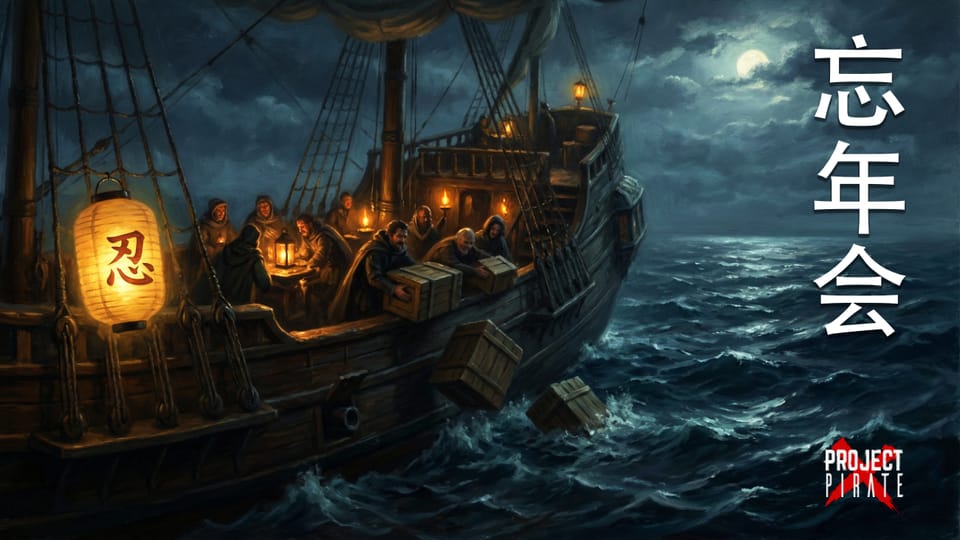
Every winter, before the long crossing, Captains face a calculation: What's ballast, and what's dead weight?
Ballast keeps a ship upright - weight chosen on purpose, stowed deep to steady the hull when the sea turns hostile.
Dead weight does the opposite - cargo kept out of habit or fear that offers nothing to the voyage ahead.
The ship that survives the winter crossing isn't the one carrying the most. It's the one whose Captain knows what to keep and what to throw overboard.
In Western business culture, we're obsessed with accumulation. We accumulate data, we accumulate process, and crucially, we accumulate history. We've built entire Agile methodologies: retrospectives, post-mortems, lessons-learned databases around the fear that if we don't remember everything, we're doomed to repeat it.
But there's another truth we ignore at our peril: Teams that cannot distinguish ballast from dead weight carry both - and sink slowly under the combined load.
As you stare down 2026, your team is likely suffering from "organisational hoarding." You could be carrying the weight of 2025's failures, grudges and constraints into a year that requires both stability and speed.
It's time to learn what Captains have always known: the art of knowing what to keep, and what to throw overboard...
The Flaw in "Lessons Learned"
Most "lessons learned" sessions don't create ballast. They create dead weight.
When a team sits down to review a failed Q2 initiative, they aren't just extracting logic - they're re-living the frustration. The person responsible gets defensive. Twenty minutes of carefully worded "constructive feedback" ensues. Someone takes notes. The document gets filed.
Three months later, same meeting:
"Remember that Q2 migration disaster? We need to make sure we don't..."
You extracted the lesson months ago. But you haven't determined whether it's ballast or dead weight - you've just documented it and started carrying it.
Some lessons steady you. Others just slow you down. But we call both "learning" and carry them equally.
When you carry this kind of weight into 2026, you aren't navigating based on current reality. You're navigating around the ghosts of 2025. You're solving for constraints that no longer exist, accommodating stakeholders who've already left the building, defending decisions that nobody cares about anymore.
The Japanese Solution: Infrastructure for Sorting
Japanese corporate culture is famous for its hierarchy and long institutional memory, yet it has a 400-year-old mechanism specifically designed to solve this problem.
They call it Bonenkai (忘年会) - literally, the "Forget the Year Gathering."
To an outsider, it looks like an office party. To a strategist, it's operational maintenance.
The explicit purpose of Bonenkai is to wash away the kuro (hardships) of the past twelve months. It operates on a principle Western teams desperately need: The ledger must reset!
Japanese business culture operates in what anthropologists call a "high-context society" - one where harmony (wa) and strict hierarchies govern daily interactions. Twelve months of suppressed grievances, small frictions, and unavoidable conflicts create immense psychological pressure. Left unaddressed, this pressure fractures teams.
So they created infrastructure for release: Bureiko (無礼講) - literally "meeting without etiquette" where hierarchy is ritually suspended. Junior staff can speak freely. Managers can be vulnerable. Everyone acknowledges difficulties, and crucially, everyone agrees that tomorrow starts fresh.
The mechanism is elegant: what's said during Bonenkai is "forgotten" the next day. Not actually forgotten - but released. The social ledger resets to zero.
The insight: You cannot navigate forward effectively while carrying dead weight from the past. But distinguishing ballast from dead weight requires infrastructure, not just intention. You cannot simply decide what to keep and what to throw overboard - you must perform the act of sorting.
This is the anti-pattern to the retrospective.
While a retrospective asks "What do we remember?", Bonenkai asks "What do we throw overboard?"
Two Tools, Two Purposes
These are complementary patterns in your PM toolkit:
Pattern: Retrospective / Lessons Learned
Purpose: Extract wisdom, identify what steadies you.
When to use: When failure contains actionable lessons.
Output: "We learned X, therefore we'll do Y differently".
Risk if overused: You document everything and carry everything.
Anti-Pattern: Strategic Forgetting (Bonenkai)
Purpose: Sort what steadies from what burdens, throw overboard what doesn't serve the voyage.
When to use: When you're carrying too much and can't tell what stabilises vs. what slows.
Output: "We acknowledge X happened, now we throw it overboard"
Risk if overused: Throwing away what you should have kept, repeating mistakes.
The key: You need both. But Western PM culture heavily overindexes on retrospectives and catastrophically underuses strategic forgetting.
We've been taught: "Those who cannot remember the past are condemned to repeat it."
But we've forgotten the second part: Those who cannot throw overboard the past are condemned to carry it until they sink.
The Cargo You're Carrying
You might not be in Tokyo, and you might not be drinking sake with your boss (although many of you will be enjoying the office Christmas parties). But the question is universal:
What are you still carrying from 2025 that doesn't serve the voyage ahead?
Here's the invisible cargo most Project Managers carry into every meeting, every planning session, every difficult conversation:
⚓ The Blame Infrastructure
Every planning meeting references "that Q2 disaster" as a cautionary tale. The lessons-learned document has become organisational scar tissue. Teams have developed learned helplessness - they assume failure before they start because they're constantly reminded of past failures.
The consequence: Your team can't take smart risks because they're navigating around historical landmines.
⚓ Phantom Stakeholders
You're still working around the preferences of people who've left the company. Their pet projects, their grudges, their political sensitivities - all gone, but you're still accommodating them.
A team I worked with spent eighteen months defending a vendor choice "because the VP mandated it." When that VP left, they discovered he'd stopped caring about it nine months earlier. They'd been carrying his preference long after he'd let it go.
The consequence: You're solving for constraints that no longer exist.
⚓ Sunk Cost Anchors
The platform investment that didn't deliver. The methodology that never stuck. The certification programme nobody uses. You can't admit it failed, so you keep finding ways to justify its existence, dragging it forward into every quarterly plan.
The consequence: Resources and attention locked into defending the past instead of building the future.
⚓ The Grudge Ledger
The project that got more resources than yours (it delivered nothing, but you're still angry). The stakeholder who killed your initiative (they were probably right, but you're still defensive). The team member who left during the difficult period (you took it personally).
The consequence: You're making 2026 decisions based on 2025 emotions.
The Diagnostic: Three Questions
Run these three filters on your 2025 cargo:
What are we defending that no longer needs defence?
Every team has things they're protecting out of habit, not necessity:
- Technical decisions made under constraints that no longer exist.
- Process choices imposed by stakeholders who've moved on.
- Project scope defined by market conditions that have shifted.
The test: If we started this project today, with zero history, would we make this decision?
The action: If the answer is No, stop defending it. You defended it well then.
Does this steady you, or just slow you?
Compare these statements:
"We learned our planning was too optimistic; we now apply a 1.3x buffer to estimates."
→ Specific, actionable, steadies future performance
"We can never trust that stakeholder group again."
→ Generalised, defensive, offers nothing except hesitation
The test: Does this lesson steady you in future storms, or just make you slower and more defensive?
Keep what steadies. Discard what doesn't.
Real example: After a failed platform migration, one team's documented lesson was "never migrate in Q4." The actual insight was "never migrate without dedicated QA support during code freeze." The first is avoidance kept out of fear. The second is a specific constraint chosen on purpose that steadies decisions.
Whose cargo is this?
Teams often carry cargo that was never theirs to begin with:
- Previous leadership's failures (you're still compensating for decisions you didn't make).
- Other teams' messes (you're cleaning up integration issues they created).
- Industry-wide problems (you're solving for scenarios that aren't actually your risk).
The test: Did this problem exist before your team touched it, and will it exist after you're done?
If you didn't load it, leave it at someone else's dock.
Real example: A delivery team spent six months working around "technical debt" that predated them by five years. When they finally asked, "Is fixing this our responsibility?" leadership said no they'd been carrying someone else's cargo the entire time.
The Ritual: Make It Physical
Japanese Bonenkai ends with Te-jime (手締め) - rhythmic, synchronised hand-clapping that signals formal closure. The sound creates a psychological boundary: Before this clap was the past; after is the future.
In a digital world, we need equivalents. Sorting cargo must be physical to be felt.
Don't just talk about throwing things overboard. Actually throw them:
Archive the Slack channel from the failed project. Don't just mute it - archive it. Remove it from your visual field.
Change the status in Jira: Move zombie initiatives from "On Hold" to "Closed - Released to 2025."
Delete the recurring meeting that discusses the thing you've decided to stop defending. If it's not worth defending, it's not worth meeting about.
Close the browser tabs you've kept open for months "just in case." Bookmark them if you must, but remove them from active attention.
This isn't administrative work. It's ceremony. You're telling your brain and your team that you've sorted the cargo.
When Each Tool Fails
Retrospective Failure Pattern:
You've documented 36 lessons learned. None are implemented. The document just grows. Teams reference it defensively: "Well, we learned last time that..."
Signal you need the anti-pattern instead: If lessons aren't being applied, they're just documentation with weight.
Bonenkai Failure Pattern:
You throw everything overboard. Team makes the same mistake three times because you threw away what should have been kept.
Signal you need retrospective instead: If you're repeating failures, you threw too much overboard. Extract what steadies you first, then throw away what doesn't.
The Warning: When Sorting Becomes Theatre
Forced sorting is as toxic as refusing to sort at all.
Bonenkai works in Japanese culture because the need for sorting is genuine and collectively felt. When it becomes corporate theatre going through motions nobody believes in, it loses all power.
Warning signs:
- Performative sorting: You archive the Slack channel, but next week's meeting still references the same failures.
- Mandatory attendance: The "voluntary" session has career consequences for absence.
- Weaponised forgetting: Leadership uses "we're throwing 2025 overboard" to avoid accountability for systemic problems.
- Indiscriminate throwing: You can't tell what steadies from what burdens, so you throw everything overboard or keep everything.
The standard: This only works if your team can genuinely distinguish what steadies from what burdens, and leadership genuinely grants permission to throw away what doesn't serve the voyage.
If leadership continues to reference or measure the thing you "threw overboard," the ritual was theatre.
If you can't tell the difference yet, run retrospectives until you can identify what's worth keeping. Then use this practice to throw away what isn't.
The Maritime Truth
The storms of 2026 don't care what cargo you're carrying from 2025. They'll hit with the same force regardless.
But you should care.
Ships carrying the right cargo, weight chosen on purpose, stowed low in the hull - stay upright in storms and move fast in fair winds.
Ships carrying everything, unable to distinguish what steadies from what burdens- move slowly until they can't manoeuvre.
Smart Captains know the difference.
The ship that survives the winter crossing isn't the one carrying the most. It's the one whose captain knows what to keep and what to throw overboard.
Keep what steadies. Throw overboard what doesn't. The crossing awaits.
Your December Action
Before year-end, run both practices:
First: Standard retrospective. Extract 3-5 actionable lessons with implementation plans. Identify what steadies you - weight chosen on purpose for 2026.
Second: Sort your cargo. Run the three questions. Identify what's being carried out of habit or fear. Throw it overboard.
Third: Check implementation. Are those retrospective lessons being applied?
- If Yes → Keep them. Throw everything else overboard.
- If No → Ask why. If there's no good reason, it wasn't worth keeping. Throw it overboard.
Ref: JP-BNK-01 // Jettisoned Cargo Manifest