Bound to the Mast: Navigating the Sirens of Scope Creep
An Odyssey through Discovery and Delivery
Every Project Manager knows the moment. You're sailing smoothly toward delivery when you hear it - that seductive voice calling from the shore: "We just need one more feature... it's a small change... the users are asking for it..."
The logic is compelling. But if you aren't careful, you'll find your project wrecked on the rocks, your timeline shattered, your budget haemorrhaging, and your team rowing toward a horizon that keeps moving further away.
We call this "scope creep," and we've been taught to fear it as the monster that destroys projects.
But what if we've been misreading the ancient warning all along?
In Greek mythology, Sirens offered knowledge, not death. What killed was losing control of the voyage - stopping entirely, rowing endlessly toward a shifting horizon, or steering enthusiastically into hidden rocks.
What the Sirens Actually Sang
In Homer's Odyssey, the Sirens weren't mindless predators. They offered something genuinely valuable: knowledge. They sang of "all things that come to pass upon the fruitful earth" - Odysseus's own heroic tale perfectly rendered. The temptation was intellectual, professional, and deeply appealing.
But their song killed in three ways.
Some sailors stopped to listen and forgot to sail... fated to rot through slow decay. Paralysis - the inability to choose, frozen by conflicting inputs.
Others kept rowing but toward a destination that kept shifting with each new verse. The horizon drifted further away with every course correction. The Crew grew exhausted rowing endlessly toward shores they'd never reach. The illusion of progress - motion without arrival.
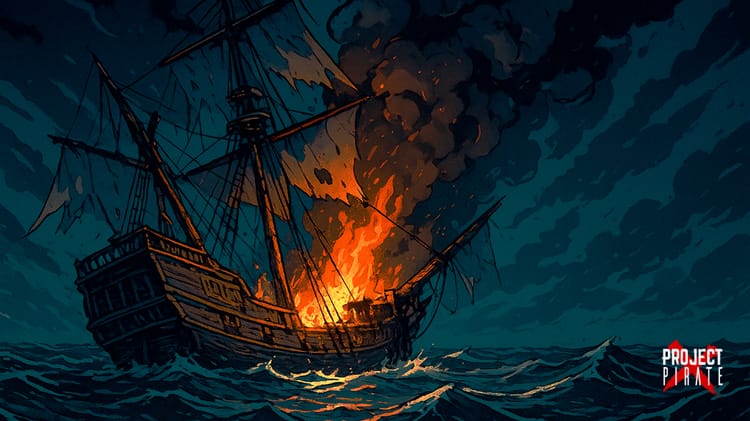
And some, enchanted by the beauty of the song, steered directly toward it - only to find their ships smashing on rocks as sharp as spears. They pursued the promise enthusiastically, blind to the consequences hidden beneath. Active destruction - crashing on the rocks of reality.
This is scope creep: valuable knowledge without navigation. It kills through paralysis, through endless drift, and through enthusiastic pursuit of the wrong course.
What We Get Wrong
Most "scope creep" starts as legitimate insight: stakeholders realising users need password reset functionality, beta testers revealing broken workflow assumptions, competitors launching features that shift market expectations, development teams discovering technical constraints.
These aren't frivolous requests. They're emergent requirements - the natural byproduct of learning.
In Agile contexts, this learning process is the entire point. We build in small iterations specifically to discover what we didn't know at the start. Sprint Reviews exist to surface these insights. Product Discovery is designed to validate assumptions before we scale.
The Sirens are singing the truth about your project.
They're telling you what users actually need, what the market demands, what technology enables. The question isn't whether to listen - you must listen. The question is how to hear without drowning.
We've confused the message with the mechanism. We've vilified the knowledge when we should be examining our response to it.
The Three Siren Songs
Not all scope changes are created equal. Understanding what you're hearing is the first step to navigating safely.
1. The Song of Discovery (Emergent Requirements)
"Users need two-factor authentication - we discovered security is their primary concern."
"The API latency makes the current design unusable - we need to cache results."
This sings after user testing, technical spikes, market validation. It offers market fit, technical viability, genuine user value.
When integrated correctly (Discovery Mode), this song adjusts the heading toward the true destination. When mishandled in Delivery Mode, it constantly resets the course - each "discovery" invalidates previous work and the ship never arrives.
It's only dangerous if treated as additive rather than informative. If you add every discovered need without removing anything else, you create a bloated product that does nothing well.
This is navigation data. This is the Siren guiding you home - if you hear it at the right time.
2. The Song of Ambition (Gold Plating)
"Let's rebuild this in the new framework while we're at it."
"Users would love animated transitions - let me add those."
"While we're in drydock, let's also fix X, Y, and Z."
This sings from internal enthusiasm, not external demand. The dangerous logic: "We're already in the code, so it's 'free' to add this now."
But you're always in dry dock until you ship - every moment is "while we're at it." This logic justifies endless additions.
This song doesn't shift the heading - it pushes the horizon back. The destination grows more distant with each addition. What started as "build login functionality" becomes "build login with OAuth, biometrics, password strength indicators, account recovery and animated transitions." The Crew rows toward a finish line that keeps receding.
It consumes your buffer and adds untested complexity. When a genuine crisis hits later, the slack is gone, spent on features nobody requested.
This is the Siren singing to your ego, not your mission.
3. The Song of Appeasement (Stakeholder Creep)
"The VP just thought of something in the hallway."
"The client mentioned this casually - they expect it now."
This sings in casual conversations that bypass governance, when you're afraid of being seen as "difficult" or "not a team player."
This song shifts the heading in multiple directions. Every stakeholder imagines a different shore. The ship tries to satisfy them all, changing course with each new voice, exhausting the crew while provisions run out.
It creates "dark work" - tasks that consume capacity but aren't tracked. It destroys predictability and erodes team trust as commitments become meaningless.
This is the Siren singing to your fear of conflict, not your judgement.
Only the first type - 'The Song of Discovery' deserves your attention, and only in the right mode. The second and third are distractions dressed as insights.
Odysseus's Navigation System
Here's where Homer reveals the solution.
Odysseus didn't plug his own ears. He didn't avoid the Sirens' island. He wanted to hear their song; he recognised its value.
What he did was create a system that allowed him to gain the knowledge without losing control of his ship.
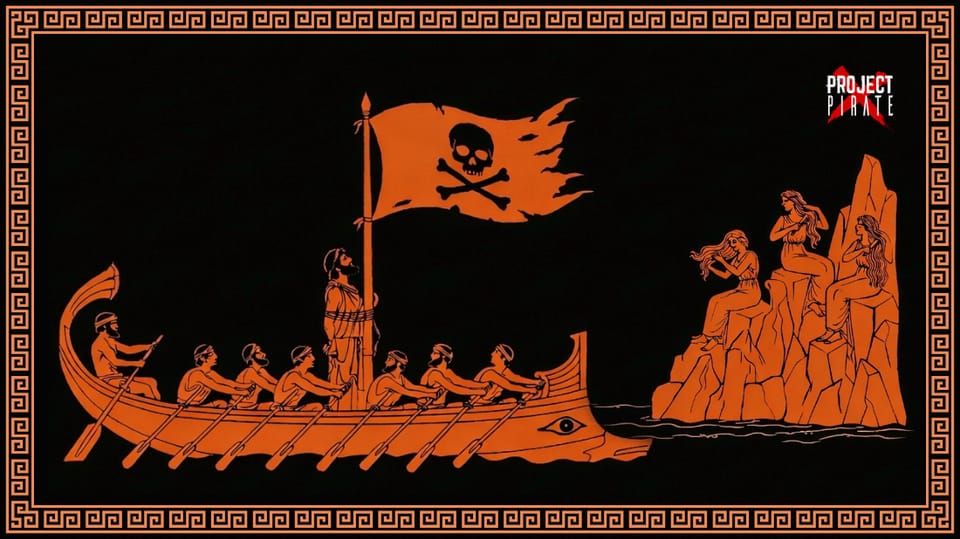
For his Crew: He used Beeswax in their ears. They couldn't hear the Sirens, so they kept rowing.
For himself: Bound to the mast. He could hear everything - all the valuable insights, all the compelling arguments but he was physically constrained from acting impulsively. He could scream, plead, and demand they turn toward shore, but the ropes held. The ship kept its course.
This is the model for modern scope management: structured exposure to change within a framework that prevents both paralysis and drift.
The sophistication isn't in avoiding the Sirens. It's in knowing when you're tied to the mast and when you're free to adjust course.
The Two Modes
The same song produces different outcomes depending on your state. This is the insight most project frameworks miss.
The Sirens' song isn't universally destructive. Its impact depends on your state when you hear it.
Discovery Mode: When the Horizon Should Move
When you're charting your course in Backlog Refinement, Product Discovery, or early-stage planning - the Sirens are your guides.
This is when new information should reshape your understanding. This is when "We discovered users need X" is gold, not lead. This is when moving the horizon brings you closer to the true destination.
But even here, sophistication matters. The goal isn't just to find the right destination - it's to sequence the journey to accelerate value. Break the voyage into shorter legs. Deliver incrementally. Bring the first horizon as close as possible, then the next, then the next. Each landing validates learning and builds momentum.
In this mode:
- Welcome stakeholder input openly.
- Evaluate emergent requirements for strategic value.
- Make trade-offs explicit: if we add X, we remove Y or extend the timeline.
- Sequence for value: Prioritise what delivers the most value soonest, creating closer horizons.
- Let the learning reshape the plan.
Stop the Sirens here and you'll build the wrong product - you'll row toward a shore that doesn't exist.
Significant discoveries - those that reshape timelines, resources, or architecture still require explicit planning and stakeholder alignment. The difference is the psychological contract: in Discovery, re-planning means "we're trading time for better value." In Delivery, it means "we must break our commitment to survive." Both trigger the same mechanics (adjusted dates, budget conversations, resource reallocation). The mandate to ask is what changes.
Delivery Mode: When the Horizon Must Hold
When you're mid-sprint or mid-execution, with commitments made and the team rowing hard toward a deadline, that same Siren song becomes deadly.
This is when you're navigating dangerous waters with a committed course. This is when "We discovered users need X" must wait until the next planning cycle. This is when the horizon must hold still long enough to reach it.
The Crew is rowing. The water is churning. Everyone feels busy. But changing coordinates when the oars are already in the water doesn't just change the destination - it breaks the Crew's rhythm.
The Crew is rowing. The water is churning. Everyone feels busy. But changing coordinates when the oars are already in the water doesn't just change the destination - it breaks the Crew's rhythm. Work already completed becomes obsolete. The effort-to-value ratio collapses. Delivery dates slip, first quietly, then catastrophically. Buffers evaporate. The Crew becomes demoralised, confused, fatigued.
The ship never feels "stalled," but it slowly runs out of time, energy, and trust. This is the tragedy of motion without arrival. This is outlined in Relational Capital.
In this mode:
- Protect the team from direct stakeholder contact.
- Channel all requests through a single gate.
- Maintain your Definition of Done - no quality erosion.
- Defer new insights: "Great discovery. Let's evaluate it in Sprint Review."
- Hold the horizon: No new destinations, no redefinition of 'done,' not until the next port.
Hear them, note them, but keep rowing toward the committed shore.
Rocks vs Sirens: When the Horizon Must Change
Not every late signal is a Siren song. Some are rocks directly ahead.
The difference is irreversibility. Sirens tempt you off course. Rocks sink you if you ignore them.
A rock is a late signal that, if ignored, causes irreversible harm or loss that cannot be reasonably recovered post-delivery. If the harm can be fixed later, mitigated cheaply, absorbed operationally, or traded off consciously - it's a Siren, no matter how urgent it feels.
Three tests determine whether you're facing a rock:
Test 1: Irreversibility. If we ship without this, is the damage fundamentally irreversible? (e.g., regulatory non-compliance, security exposure, contractual breach)
No → Siren. Yes → continue.
Test 2: Loss, not value. Is this preventing loss rather than creating upside?
No → Siren. Yes → continue.
Test 3: Non-discretionary. Do we genuinely lose the ability to choose later?
No → Siren. Yes → Rock.
Rarely, a late discovery reveals that a dramatically different course would deliver multiples of the original value - not avoiding loss, but capturing exponential upside. This isn't a Siren - an incremental improvement tempting you off course. And it isn't a rock - an irreversible threat that sinks you if ignored. It's a strategic re-charter. Value can justify changing destination but only if the value increase is explicit and material, the cost of disruption is acknowledged at senior level, and the original horizon is formally released, not quietly abandoned. Anything less remains a Siren song.
When a true rock appears, disciplined teams don't pretend the horizon hasn't changed. They re-plot openly, adjust dates, make trade-offs visible, and assign senior accountability. No "we'll squeeze it in."
If declaring something a "rock" doesn't trigger explicit re-planning and visible cost, it's not a rock - it's a Siren wearing a disguise.
The integrity check: If someone says "it might be bad later," ask: "Tell me what cannot be undone if we ship." If they can't answer specifically - it's a Siren.
True rocks are rare. If they're common, Discovery ended too early or the team is gaming the system.
The disciplined Project Manager knows which mode they're in at any given moment and adjusts their defences accordingly.
Most scope creep happens when we confuse the modes - when we treat Delivery like Discovery (constant changes mid-sprint) or Discovery like Delivery (rigid adherence to a plan that's clearly wrong).
Stop Fighting, Start Navigating
We've been approaching scope creep with the wrong metaphor.
We "fight scope creep." We "protect the project." We build walls to keep stakeholders out.
This creates an adversarial dynamic. Stakeholders feel unheard. Teams feel besieged. Project managers become gatekeepers rather than guides.
The Sirens offer a better way:
Scope change isn't an enemy attack - it's knowledge trying to reach you.
This framework assumes good faith: that stakeholders genuinely believe their requests add value. When scope change becomes a political weapon rather than legitimate discovery, the navigation becomes more complex. But the foundation remains: know your mode, distinguish the songs, hold the horizon when committed.
- Discovery Mode: Lower your defences. Listen closely.
- Delivery Mode: Raise your defences. Note what you hear, but keep rowing.
This reframe changes everything:
Instead of: "We can't accept that change - we're locked down."
Try: "That's valuable insight. We're in Delivery Mode right now, but let's evaluate it for the next cycle."
Instead of: "Stop bringing me new requirements!"
Try: "Are we in Discovery or Delivery? If Discovery, let's explore. If Delivery, let's capture this for later."
Build Your Mast, Don't Plug Your Ears
The Sirens of scope creep will always sing. Emergent requirements, market shifts, user discoveries, technical constraints - these voices are inevitable in any complex endeavour.
The organisations that succeed aren't the ones that try to silence the Sirens. They're the ones that build sophisticated navigation systems to hear the song without wrecking the ship.
Your system requires five disciplines:
Distinguish the songs. Is this Discovery (real learning), Ambition (ego-driven), or Appeasement (fear-driven)? Only Discovery deserves attention.
Know your mode. Are you in Discovery (when the horizon should move) or Delivery (when it must hold)? The same song kills in the wrong context.
Build your mast. Create structures that let you hear knowledge without losing control: change evaluation processes, sprint boundaries, clear handoff points between modes.
Hold the horizon. In Delivery Mode, the destination stays fixed. Changing coordinates when the oars are in the water breaks the Crew's rhythm and guarantees you never arrive.
Navigate, don't avoid. Your job isn't to repel change. Your job is to hear it in the right context and respond with the right system.
The Monday morning test: Next time you hear a change request, pause and ask yourself one question: "Are we in Discovery or Delivery right now?" That single question consistently applied transforms scope creep from a crisis into a navigation decision.
The ancient Greeks understood something profound: knowledge is dangerous not because it's false, but because it can paralyse you. The Sirens sang truth so compelling it could prevent you from ever reaching home.
Your home is delivery - the product or service that solves the user's problem, ships on time, and succeeds in the market.
The successful Captain hears the difference.
Not through better willpower. Not through stricter control. But through sophisticated navigation; knowing when to listen closely and when to keep rowing, when to adjust the heading and when to hold steady, when the Sirens guide and when they destroy.
Listen to everything. Act with discipline. Navigate accordingly.
Scope creep isn't the enemy. The illusion of control is. The question isn't whether the Sirens sing - it's whether you've built a system to hear them without stopping, drifting, or crashing.
The horizon awaits. ⚓