The Eye of the Storm - The Missed Opportunity
There is a meteorological phenomenon that most people misunderstand the moment they hear it described.
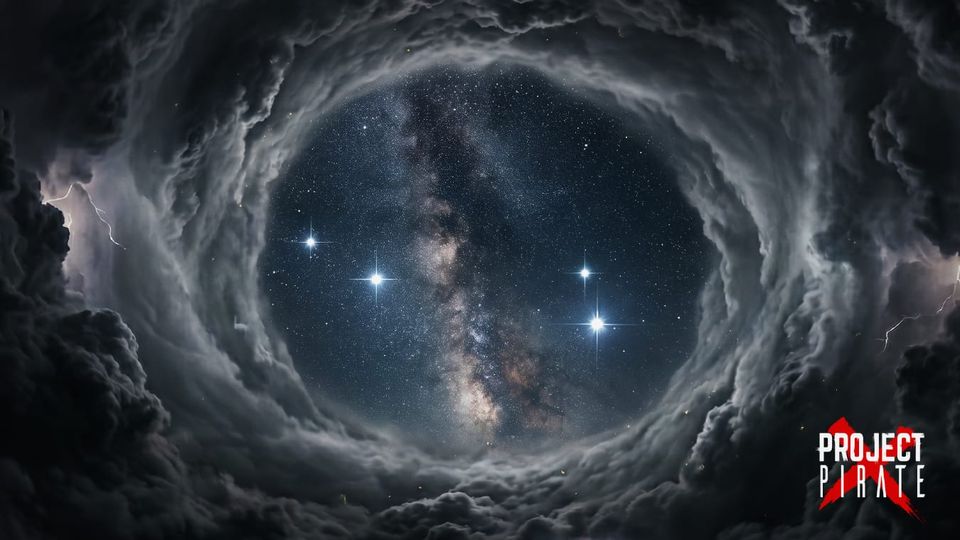
The eye of a storm is not the absence of the storm. It is the storm at its most organised - a column of descending air, eerily calm, sometimes clear enough to reveal stars overhead while the surrounding storm rotates at speeds that can dismantle anything in its path. The eye is not a sanctuary. It is a vacuum. Within a vacuum, there is no consequential friction.
Forging requires friction. The metallurgist's heat, the sailor's weather, the leader's genuine stakes; all of it depends on resistance. Friction is the mechanism by which raw material becomes something harder, more refined, more capable of holding its shape under pressure. The eye of the storm offers proximity to the fire without the risk of the burn. You can feel the warmth. You will not be changed by it.
The danger of the eye is not the conditions within it. It is the view from it.
Standing inside, you can see the storm in every direction. The chaos is visible, tangible, even close. The outer bands occasionally pass through - enough to remind you that what surrounds you is real. Meteorologists know the trap: people caught in the eye, believing the worst has passed, step outside too early and are consumed by the returning storm they never saw coming. The eye offers the most intimate front-row seat available: close enough to observe everything, far enough to be changed by nothing.
The Storms Were Real
Consider the industrial storms of the last two decades.
Cloud migration, digital transformation, the collapse of legacy infrastructure, the emergence of AI. These were not gentle shifts in professional weather. They were historic disruptions that restructured industries, rewrote job titles, and redrew the boundary between organisations that survived and those that did not.
Most of the professionals who lived through them were present for all of it.
The question is not whether you were in the storm. It is whether the storm was ever in you.
The Person in the Room
There is an archetype the Storm-Tested framework has not yet named. Not the professional who was absent from transformation, sheltered by distance or comfortable irrelevance. Not the one who watched from the shore.
The person who was in the room.
The one who attended the steering committees and the transformation workshops. Who speaks fluently about the cloud migration programme, the agile adoption, the restructure that reshaped the organisation. Who can recall the turbulence in accurate detail: the budget pressures, the stakeholder politics, the technical complexity. Who has a legitimate claim to the language of transformation, because they were undeniably there.
But who, if honest, spent that time in the eye.
Present at the centre. Informed, credentialled, articulate. Surrounded by the storm in every direction. But never quite stepping into the storm. Never taking on the assignment where failure was visible. Never leaning into the uncertainty that had no playbook. Never sitting with the discomfort of not yet knowing enough to lead. Close enough to observe. Far enough to remain unforged.
The storm shaped the landscape. It did not shape them.
The Seduction of the Eye
The eye is where the strategic titles live. The oversight committees, the governance forums, the programme assurance functions, the advisory roles with impressive scope and careful distance from direct accountability. The work is real, the contribution is genuine, and the salaries reflect a seniority that the titles are designed to signal. This is precisely what makes the eye seductive.
The eye is rarely experienced as a compromise. It is usually experienced as an arrival.
To leave it for the storm can feel like a step backwards. More exposure. More visibility when things go wrong. More genuine uncertainty about whether you are equal to what is being asked of you. Organisations, quite rationally, tend to fill these roles with their most polished, most articulate, most politically reliable people.
A professional class forms this way - fluent in the vocabulary of storms they have observed but never entered. They carry the impressions of transformation - the frameworks, the language, the credibility of proximity without the structural change that only friction delivers. Like wax held close to heat, the environment leaves its mark. The shape looks right. But wax that holds its form in warmth deforms under pressure.
In the eye, you have input. In the storm, you have consequences.
The Story That Follows
The eye rarely involves a deliberate choice. When a career is shaped by proximity to transformation rather than by transformation itself, the resulting narrative is sincerely believed and structurally incomplete. A genuine conflation of presence with experience, of observation with capability.
The most revealing characteristic of the eye-of-the-storm professional is not what they claim, but what they believe. They have been present at consequential moments. They have the vocabulary of the survivor without the altered grain of one. They have not yet reckoned with the fact that participation in a process and being changed by it are not the same thing.
The gap between what you believe yourself capable of and what you have actually been tested to deliver only surfaces when the next storm arrives and the eye is no longer on offer.
Stepping Into the Storm
Where, in your current role, are you choosing the eye?
Not through negligence. Not through cowardice. But through the perfectly rational accumulation of small decisions that keep you within the calm - the project you did not put your hand up for because it felt too exposed, the technology you observed rather than engaged with, the leadership challenge you deferred because the timing did not feel right. Each decision individually reasonable. Collectively, the architecture of an eye-of-the-storm career.
Organisations rarely move you out of the eye; they relocate you within it. A new committee. A broader remit. A more senior room with the same distance from consequence. This decision belongs to you, and it will not make itself.
Stepping out does not require manufacturing disaster or abandoning the judgement that has served you well. It requires Voluntary Exposure - the willingness to be visibly out of your depth in service of building capability you do not yet have.
And it is worth being honest about what that actually feels like; because the language of stepping into the storm can sound almost surgical from a distance. It is not. It is the meeting where you speak up about the thing you don't yet understand, knowing the gap is visible. It is accepting the delivery that could fail publicly, with your name on it, at a moment when your professional identity has been constructed around not failing. It is the moment you realise that the seniority you earned in the eye carries no particular weight in the storm - and choosing to go anyway. That feeling does not resolve before you step forward. You step forward inside it.
That might mean sitting in the session on a technology that currently makes you uncomfortable and asking the question that reveals the gap, rather than performing familiarity. It might mean accepting the assignment where success is genuinely uncertain; where your reputation sits alongside the outcome, where there is no playbook and the expectation of one would be naive. It might mean choosing to lead through the messy, ambiguous, politically charged challenge rather than supporting it from a position that keeps you usefully adjacent and safely unaccountable.
The storm is where the fear lives. It is also where the friction is. Without friction, there is no forging.
The Question That Matters
The Storm-Tested are not people who sought catastrophe. They are people who, at key moments, chose not to retreat to the calm when the calm was available. They recognised that the warmth of the eye is not the same as surviving the weather.
There is no certification for this. No governance role that confers it. No convention or summit to attend that substitutes for stepping into the storm.
When the next wave of transformation arrives - and the horizon suggests it is already forming - will you find yourself once more at the centre, watching the chaos rotate with the sincere belief that you are part of it?
Or will you have already stepped into the weather?
Not born in the calm. Forged beyond it.