Pure Imagination: Why Transformation Demands the Courage of Misfits
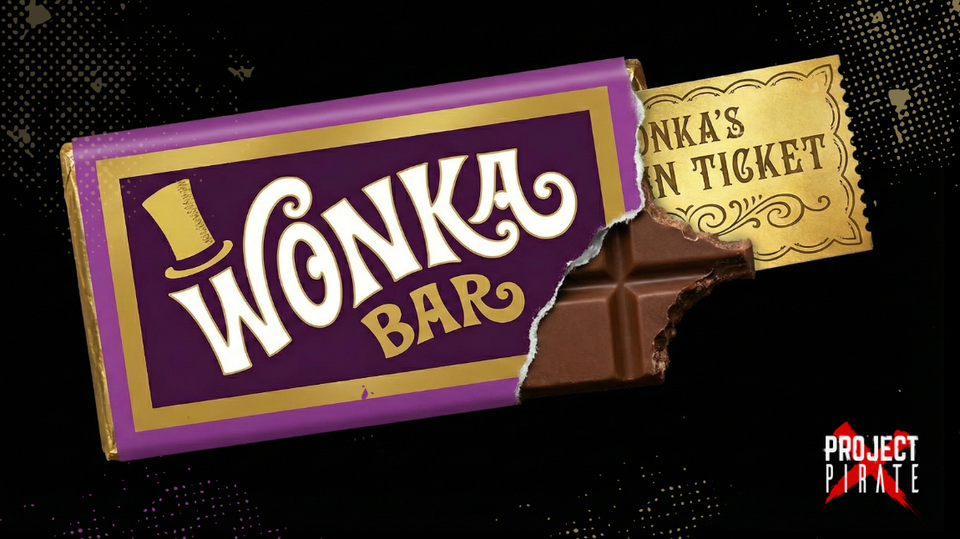
“Come with me and you’ll be in a world of pure imagination…”
Gene Wilder's voice carries a particular magic in Charlie and the Chocolate Factory. When Willy Wonka opens the doors to the chocolate room and begins singing "Pure Imagination," he's issuing an invitation to believe in the impossible - to step beyond what seems reasonable into a world where rivers run with chocolate and everything defies explanation.
But here's what matters: Wonka isn't a dreamer. He's a builder who rejected every convention of confectionery to create something nobody thought possible. He's a misfit who chose the uncharted path, built the impossible factory, and proved the vision through engineering genius.
Like pirates who rejected safe harbours for uncertain seas, he navigated waters nobody had mapped and built capability that defies conventional wisdom.
This is what transformation demands.
The Imagination-Execution Gap
Transformation leadership exists in tension between two forces: the capacity to imagine what doesn't yet exist, and the storm-tested resilience to deliver it through organisational chaos.
Most transformation failures aren't technical. They're failures of imagination or nerve. Leaders cannot envision a genuinely different future - so they rebrand incremental change as transformation - or they abandon the vision when political resistance mounts, retreating to the safety of known approaches.
"Want to change the world? There's nothing to it." That line isn't naive optimism. It's recognition that the gap between imagining and doing is smaller than we believe - not because execution is easy, but because the real barrier is having the courage to begin at all.
Wonka asks his guests to trust him into a space that cannot be fully articulated beforehand, that will "defy explanation" until they're experiencing it. This is precisely what transformation leaders do. They ask stakeholders to commit resources, political capital and organisational energy to something that doesn't yet exist and cannot be perfectly specified.
They're selling imagination backed by demonstrated capability. Vision supported by storm-tested delivery.
Imagination without execution is fantasy. Execution without imagination is mere implementation. You need both.
The Misfit’s Choice
Misfits imagine the impossible, then have the nerve to deliver it.
Transformation leaders make the same choice.
You could stay in business-as-usual. Execute known processes. Deliver incremental improvements. Stay safely within established patterns where success is predictable and failure is manageable. But you don't. You choose the uncharted waters - the organisational storm, the political complexity, the technical uncertainty.
Why? Because adaptive capacity is the only sustainable competitive advantage when markets shift faster than systems.
Traditional delivery frameworks treat the journey as cost to be eliminated. They demand we move from A to B with zero deviation. But in volatile markets, Point B is moving. If you lock down the route, you miss the destination. Real transformation isn't about efficiency; it's about the agility to chase a moving target.
The organisational learning, the relationships forged under pressure, the adaptive capacity built through navigating storms - this is the actual value. The delivered platform or system is almost secondary to the transformation in how the organisation operates, how teams make decisions under uncertainty, how leadership responds when conditions change.
The misfit's path requires:
- Comfort with ambiguity - the speed to act before you have 100% of the data, because waiting for certainty means competitors have already moved.
- Political intelligence - you need people who can navigate by stars when instruments fail, but also recognise when the Crew is planning mutiny!
- Resilience through betrayal - storms aren't failures, they're where you prove the vessel. But some storms come from inside the ship.
- Discovery mindset - being open to finding treasure you weren't originally seeking, even if it threatens established power structures.
These aren't soft skills. They're the capabilities that separate transformation leaders from Project Managers. And they come at a cost.
The misfit who survives isn't the rebel without discipline. It's the leader who knows when to break rules and when to enforce them ruthlessly.
Chaotic misfits get fired. Disciplined misfits become CEOs.
The Darker Waters
Most transformation literature is written by observers, not practitioners. Here is what they won't tell you: real transformation is an organisational coup.
But not because transformation leaders are conquistadors. Because transformation surfaces conflicts that were always present but politely ignored. You're not creating resistance; you're making visible the territorial boundaries, power structures, and comfortable kingdoms that were always there.
The people who built their careers on the old ways will resist - not with honest objection, but with bureaucratic sabotage, passive resistance and political manoeuvring that stays just below the visible waterline. This isn't personal animosity. It's rational self-interest. They're defending positions that transformation threatens.
Storm-tested doesn't just mean you've navigated bad weather. It means you've learned to read these dynamics. You can distinguish between genuine concerns and disguised self-interest. You've developed the political intelligence to navigate power structures while maintaining the vision that justifies the disruption.
The "spirit of adventure" sounds noble. But adventure, in organisational terms, means operating in spaces where established rules don't apply, where the outcome can't be guaranteed, and where people with most to lose from change have incentive to ensure you fail.
Wonka survived this. He locked his factory and worked in secret because he'd been betrayed by competitors who stole his recipes. When he reopened, he'd built something so advanced that theft became irrelevant. He didn't just imagine a better chocolate factory. He engineered competitive advantage that couldn't be copied.
This is the freedom transformation offers: not escape from constraint, but the capacity to operate beyond conventional limitations. You're free if you're willing to pay the price - political isolation, career risk, the burden of leading people through sustained uncertainty while those invested in the status quo work to prove you wrong.
If you truly wish to be.
What Markets Reward
Traditional transformation methodologies try to eliminate surprise. Define everything upfront. Lock down requirements. Minimise deviation from plan. Treat any divergence as failure.
But transformation, by definition, involves discovering things you couldn't have predicted. Markets don't wait for your five-year plan to complete. Competitors don't pause while you finish your requirements gathering. Technology doesn't stop evolving because you locked down your architecture.
The value emerges from unexpected places - not because planning failed, but because the journey revealed opportunities invisible from the starting point. "What we'll see will defy explanation" isn't a bug. It's the feature that creates competitive advantage.
The best transformations I've witnessed haven't delivered exactly what was originally specified. They've delivered something better - something that emerged through building, learning, adapting, and discovering what was actually possible once the voyage began.
This requires leaders who can hold firm vision while remaining open to better routes. Who can maintain strategic direction while adapting tactical approach. Who can find their way through fog and storm, but still bring the Crew safely to harbour.
Markets reward this capability. They destroy the hesitant.
The adaptive capacity you build through transformation - the organisational muscle memory of navigating uncertainty, the leadership capability of making decisions with incomplete data, the team cohesion forged through shared crisis - this is the asset that protects your P&L when conditions change.
What does adaptive capacity actually look like? It's the team that pivots strategy mid-sprint without descending into chaos. It's the leadership group that can maintain direction whilst completely reworking approach based on new data. It's the organisation where "we discovered something better" is celebrated, not punished as deviation from plan. These aren't abstract qualities - they're observable behaviours that emerge from navigating genuine uncertainty together.
Because conditions always change. The question is whether your organisation can change with them.
The Choice
This isn't technical problem-solving. It's organisational adventure that demands the capacity to imagine what doesn't yet exist, the political intelligence to navigate resistance, and the storm-tested resilience to keep moving when the route changes and allies become enemies.
Wonka's invitation works because he bet his entire factory on finding one honest child. He bet on character, not credentials. That's the wager transformation demands - not perfect plans or guaranteed outcomes, but the right people with the right qualities facing genuine uncertainty.
This isn't a pleasure cruise. It's a voyage into uncharted waters where the established order will fight to pull you back to shore. You'll face storms from outside and resistance from within. You'll make decisions with incomplete information while those invested in stability work to prove you wrong.
But if you succeed, you'll have built what seemed impossible. You'll have created adaptive capacity that becomes sustainable competitive advantage. You'll have proven that imagination backed by storm-tested delivery can reshape organisational reality.
The question isn't whether you can perfectly specify the destination. The question is whether you have the imagination to envision it, the courage to begin the voyage, and the resilience to keep sailing when everything goes wrong.
Are you ready to burn the map?
Because that's what it takes.
Want to change the world? There's nothing to it.
Come with me.