[REDACTED]
Redacted
Every document arrives with invisible black bars already applied.
The question is whether you already know where they are.
There is a particular image that has become iconic in the culture of secrets.
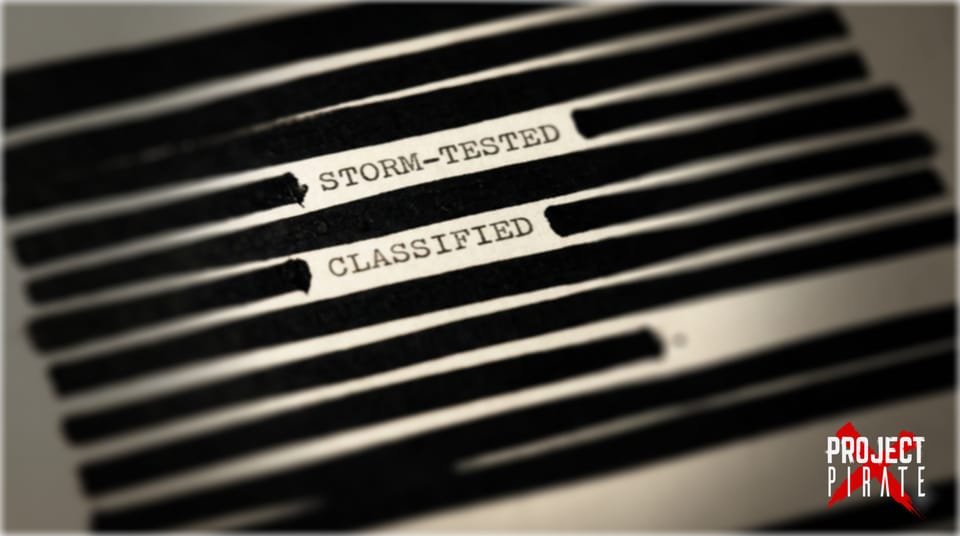
A government document. Official letterhead. Typewritten lines from another era. And running through it, those heavy black bars — obliterating names, dates, locations, entire paragraphs. Redacted. Classified. Available to some, withheld from others. The information exists. It simply isn't yours to know.
What that image captures is not just secrecy. It captures power. The power to determine what gets seen, what gets known, and what gets buried beneath a black bar thick enough to end a career or protect one.
Most professionals encounter redaction only in that literal sense — the classified document, the legal disclosure, the NDA clause. But redaction as a concept runs far deeper than government paperwork. It runs through every organisation, every leadership conversation, every strategic decision ever made.
The question isn't whether information is being withheld from you. It always is. The question is whether you understand why, and whether you've developed the craft to do it yourself.
The Organisational Architecture of Redaction
Every organisation operates on information asymmetry. This is not a conspiracy. It is a structural reality, as inevitable as hierarchy itself.
Executives sit at the intersection of information flows that junior staff cannot access - board discussions, regulatory conversations, M&A activity, restructuring scenarios. Much of this is legally restricted. Some of it is commercially sensitive. All of it is subject to clearance levels that rarely appear on an org chart but shape every conversation in the building.
The org chart tells you the reporting lines. It does not tell you the information lines. These are different maps, and confusing them is one of the most reliable ways to misread organisational power.
There are three distinct layers of redaction operating in any complex organisation. Understanding them is not cynicism. It is literacy.
Layer One: Redaction by Grade
This is the structural layer. It is not personal, and it is not malicious. It simply reflects the reality that different roles require different information to function.
A Programme Manager running a platform delivery does not need to know the detail of pending regulatory negotiations that might affect future investment decisions. An analyst does not need the full context of a board-level strategic review. Information is partitioned not to exclude, but because unbounded information flow creates noise, not clarity.
The NDA formalises this. The clearance level makes it explicit. But it operates informally in every meeting where the agenda is set before you arrive, in every conversation where the real discussion happened the day before in a smaller room.
The skill at this layer is not resentment. It is pattern recognition. Experienced professionals learn to read the shape of what they're not being told. They notice which questions receive careful non-answers. They track which decisions arrive fully formed with no visible deliberation. They understand that alignment is frequently a necessary fiction — and that their job is to execute well within it, while staying alert to the moments when that fiction starts to crack.
Layer Two: Redaction as Leadership Craft
This is where redaction shifts from something that happens to you to something you actively practice.
Effective leaders are, among other things, information stewards. They receive signal from multiple directions — from stakeholders, from sponsors, from political currents running through the organisation — and they make deliberate decisions about what to pass to their team and what to absorb at the boundary.
The instinct of less experienced leaders is often to relay everything. Transparency as default. No filter. The intention is good — they want their team to feel informed, included, respected. The effect is frequently the opposite. Unfiltered stakeholder anxiety, transmitted directly to a delivery team, does not produce informed professionals. It produces distracted ones.
A Captain who relays every storm warning to the Crew without context or calibration does not inspire confidence. They produce paralysis. The Crew needs to know enough to sail well. They do not need to know everything the Captain knows.
The measured leader absorbs pressure at the boundary. They translate noise into signal before passing it forward. They protect their team's focus not through deception, but through editorial discipline.
This is the distinction that separates protective redaction from damaging secrecy. Protective redaction serves the Crew. It filters the irrelevant, buffers the destabilising, and delivers only what enables better work. Damaging secrecy withholds what the team needs in order to protect the leader's position or avoid a difficult conversation.
The test is simple: whose interests does the withheld information serve?
Layer Three: What You █ █ █ █ █ Not to Put on Record
This is the most sophisticated layer, and the most ethically complex.
Some professional judgment never enters the record. It lives in the understood space between parties — the things known but never written down, never recorded in a follow-up email, never surfaced in a steering committee update.
This is strategic redaction. And it is everywhere.
The experienced leader chooses, with precision, what enters the formal record. They understand that the record is permanent, discoverable, and context-free. A comment that is entirely reasonable in the room can read very differently in an audit twelve months later. A risk that was genuinely assessed and accepted can look, in retrospect, like negligence if the assessment wasn't documented with sufficient care.
What you choose not to put on record is a decision with consequences as real as what you do document. The absence of a record is itself a kind of record.
Here is where purity and pragmatism diverge — and where the craft becomes genuinely difficult.
The principled version of strategic redaction is about precision and timing. You withhold because the moment for commitment hasn't arrived. Because the information is still forming. Because putting something on record prematurely closes options that should remain open. The strategic redactor is present and engaged — they are simply precise about what enters the formal record, and they commit clearly when the moment arrives.
The lesser version is institutional cowardice wearing a sophisticated coat. Withholding not because the information is incomplete, but because commitment is uncomfortable. Keeping options open not as strategy, but as a way of never being accountable for a decision.
The test question is this: Are you withholding because you need more information, or because you want the optionality of never having committed?
The first is craft. The second is politics. They can look identical from the outside, which is precisely what makes this layer so difficult to navigate — and so easy to abuse.
Reading the Black Bars
If you cannot yet practice strategic redaction, you can at least develop fluency in reading it.
Organisations leave traces of what they're not saying. The skill is learning to see them.
// Redaction Audit — signals worth tracking //
- The email chain where you are CC'd from the third message onward, but the first two aren't included
- The budget line that migrates from Strategic Investment to Opex without explanation
- The silence that follows a specific question at a Town Hall
- The agenda item that disappears between one meeting and the next, with no resolution on record
- The sponsor who begins every sentence with "I'll leave that with the team" — where previously they offered a view
- The executive who delegates attendance at your steering committee three levels down, with no explanation
None of these signals is definitive. All of them are worth noticing. The pattern across multiple signals is where the real information lives.
The Clearance You Actually Have
Most professionals assume a higher information clearance than they actually hold. This is not arrogance — it is a natural consequence of operating close to the work, where local knowledge can feel like strategic knowledge.
Clearance is not granted by title. It is earned by demonstrating, over time, that you understand the value of the black bars. That you can hold sensitive information without it leaking into your behaviour, your team conversations, your stakeholder relationships. That you know the difference between what you know and what you're supposed to know.
The leaders who are brought into the room — who receive the unredacted version — are almost never the loudest voices in the building. They are the ones who have demonstrated, repeatedly, that they can handle information with discretion. That they use it to serve the organisation's interests, not their own positioning.
Trust, in organisations, is largely a function of information handling. What you do with what you know is watched more carefully than most people realise.
What This Means for the Crew
Your Crew is operating with a redacted document. The one you gave them.
The leader who withholds through neglect — not judgment but distraction — leaves their team making poor decisions on incomplete information, and eventually stops being trusted with the truth in return. The one who transmits everything unfiltered, in the name of transparency, creates a different problem: a Crew so saturated with organisational noise they cannot distinguish signal from static.
The Storm-Tested editorial leader practises redaction as a craft. They pass forward what enables. They absorb what destabilises. They commit to the record what should be committed, and hold — with precision — what should be held. When they withhold, it is a conscious decision in the service of their Crew. Not a cover for the absence of thought, and not a bureaucrat's reflex toward self-protection.
The test is always the same. When you choose not to say something, or not to document something, ask yourself: does this decision serve the work and the people doing it? Or does it serve you?
If you cannot answer that question cleanly, the black bar belongs somewhere else.
X Marks the Spot
The redacted document is not a failure of transparency. It is evidence that someone made a judgment about what information belongs where, and why.
In a culture that fetishises radical openness, that judgment has become unfashionable. We treat information withholding as inherently suspicious — as if every black bar is concealment rather than craft.
But the most effective leaders I have encountered are not transparent by default. They are precise. They know what their Crew needs and when they need it. They know what the record should reflect and what it should not. They understand that silence is a professional instrument — one that, like any instrument, can be used with skill or without it.
Developing fluency in reading, holding, and deploying redaction is not something that comes from a framework or a course. It is earned through proximity to complexity — through enough cycles of watching how information moves through organisations, what happens when it moves badly, and what it costs when the wrong things get committed to paper.
In organisations, information is rarely missing. It is simply placed behind the wrong black bars.
This document has been partially declassified. The operational appendix remains restricted.
Join the Project Pirate Crew — where the operational appendix is shared with those who've earned the clearance.
⚓ Project Pirate — Loyal to No Fleet, United by the Storm — Storm-Tested™