The Countdown
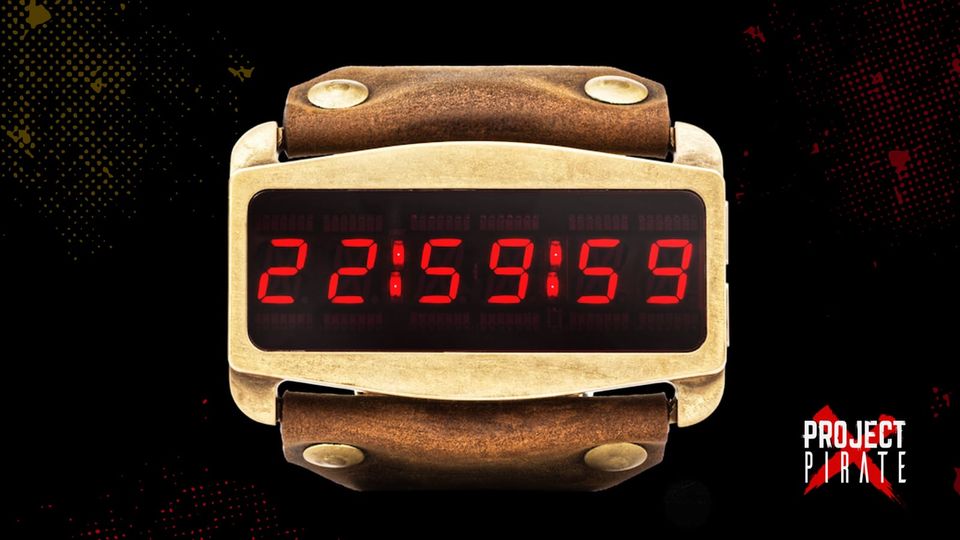
In 1981, John Carpenter gave us the anti-hero Snake Plissken in the film, "Escape from New York" - a war veteran turned cynical criminal forced to rescue the President from a maximum-security Manhattan Island Prison in a dystopian future. To ensure compliance, the state injects Snake with microscopic explosives. He has 23 hours to finish the mission, or the explosive capsules rupture his carotid arteries.
The ultimate hard deadline. Biological. Non-negotiable. The timer isn't just on his wrist... it's in his blood.
Decades later, you can buy a replica of that timer (even with the ability to enable Hartford Summit mode - 23 hours to finish the mission). The Lifeclock One is a luxury wearable, machined in brass with your name burned into the firmware.
We are literally paying for the aesthetic of being under the gun.
Which raises the only question that matters for the modern professional:
Who set the timer on your wrist?
The Imposed Mission
In the corporate world, we all carry blood-borne deadlines.
These are the milestones set by a Steering Committee six months before the team was hired. The fixed date contracts signed in boardrooms you were never invited to enter. The organisation sets the clock and announces it as gravity. They believe this makes them the authors of your time.
They are wrong.
Organisations think they are buying labour time. Some professionals quietly use the same deadlines to manufacture future versions of themselves.
The Parallel Clock
Snake completes the mission - but he is never an asset. He is a leader operating inside a high stakes survival game, running his own agenda alongside theirs.
Most professionals miss the second timer.
Inside every imposed mission, there is a Parallel Clock available to those who choose to run it. The organisation measures the delivery - the go-live, the document, the software release, the product launch... the President. That is what they contracted for.
But what you extract from the same hours belongs entirely to you:
- The high-pressure alliances forged in the trenches - relationships that will outlast this programme by decades.
- The mental models developed while navigating chaos that no methodology ever taught you.
- The reputation earned as the person who doesn't fracture when the timer hits 00:05:00.
- Capability forged under pressure that you could not manufacture and the organisation could not provide - under normal conditions.
The organisation extracts the output. You extract the transformation.
The Friction of the Storm
This is not a romanticisation of grind culture. Not every countdown builds capability; some only consume it.
There is a vital distinction between the pressure that forges a blade and the heat that merely incinerates. Some missions are genuinely pointless. Some organisations destroy capability faster than you can build it.
Wisdom is learning the difference between a storm that makes you a better sailor and a storm that is simply trying to sink the ship.
Run Both Clocks
Being 'Loyal to No Fleet' means recognising that you are the Captain of your own career - even when you are sailing in someone else's storm. It means knowing when to run both clocks. And when to walk away before those explosive capsules rupture.
Snake rescues the President. He fulfils the contract. But he walks away with his capability and his agency intact. He didn't merely survive the clock; he used the mission to prove he could not be broken by it.
Deadlines are how organisations measure delivery. Parallel clocks are how professionals measure transformation.
The organisation may own the deadline. They may have injected the capsules and started the countdown. But the hours - how you move inside them, what you learn, and the person you become while the seconds tick down... well those are yours.
The organisation gets what they contracted for.
You keep everything else.
Run both clocks.
Fail We May, Sail We Must. 🏴☠️
The Parallel Clock doesn't run itself. The 'Career as a Project' (CaaP) framework - published as a 4 part series outlines how to architect your own second timer deliberately, turning professional development from passive accumulation into a managed mission.