You Can't Cheat the Ferryman

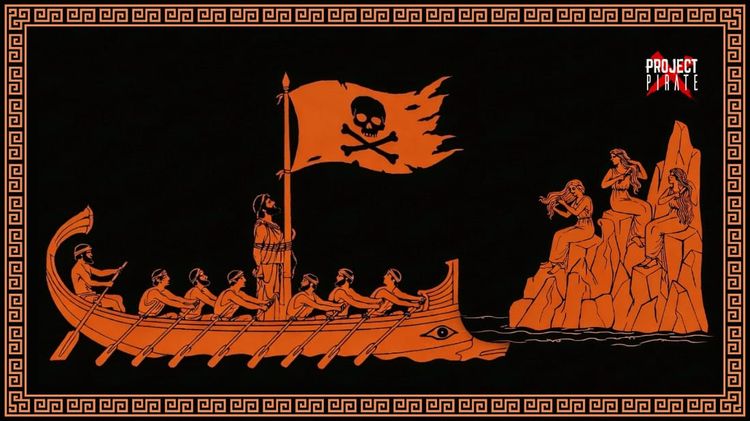
In Greek mythology, Charon ferries the souls of the dead across the river Styx to the underworld. His service is not optional, his route is not negotiable, and his fee is not subject to discussion. Those who could not pay - or who refused were left on the bank. Not punished. Not argued with. Simply left, to wander the shore.
The toll required was not a surcharge imposed by a difficult stakeholder. It was the acknowledged cost of passage. The living prepared for it. The dead carried it. And the ferryman collected it without ceremony, because there was nothing personal in the transaction. Physics does not negotiate. Neither does transformation.
The coin can be many things. Capital. Time. Resource. Mental capacity. A portion of your reputation or your political will. The denomination changes. The principle does not. All are finite. All are subject to opportunity cost. All are diminished when committed to the wrong crossing. They are all tolls, paid in pursuit of the other shore.
The toll can be many things. The denomination changes. The principle does not.
The River We Are Trying to Cross
The scenario is a familiar one in complex delivery environments: two distinct entities operating in a sequential dependency. Take a back-end platform team and a mobile application team working in a traditional finish-to-start sequence. The model is optimised for local labour efficiency, and under the right conditions it is entirely rational.
The question is whether a different model: full-stack teams working in parallel can shorten the distance between idea and outcome. Not by working harder, but by eliminating the structural lag that exists between one team putting down their tools and the next picking them up.
This is the other shore. It is visible from where we stand. And there is a ferryman between here and there.
The cost of the crossing is never theoretical. To transition from a sequential model to a parallel one, a team must divert active capacity away from business as usual delivery and spend it on the architecture of the new model itself: aligning upfront contracts, building shared design patterns, and absorbing the friction of early coordination. Output temporarily drops. A milestone or a release cycle will be missed.
That is the toll. Not a risk, not an estimate, but a known, quantifiable loss of momentum that must be paid before the new state can function.
This law is indifferent to the nature of the change. The toll applies equally whether you are restructuring an engineering department, integrating an acquisition, shifting an organisational culture, or stepping into a new leadership role. You cannot adopt a new operating model without paying for the messy, inefficient space between the old world and the new. The first quarter of a reorg will be less productive than the last quarter of the old hierarchy. The first six months of a corporate merger will consume more energy in cultural alignment than it returns in synergy.
The slowdown is the fare. It is the cost of buying your way out of the old model.
The Mistake Most Organisations Make
The instinct of most transformation sponsors is to treat this cost as a problem to be engineered away. If we plan well enough, communicate clearly enough, work efficiently enough, perhaps we can cross without the fare coming due. Perhaps the new structure will hit the ground running at full capacity from day one.
This instinct is understandable. It is also what leaves organisations stranded mid-river.
When the cost of transformation is not declared in advance, it does not disappear. It surfaces as delay, as frustration, as a performance conversation that frames the transition itself as the problem. The team is told to move faster. The new model is blamed for the slowdown the new model was always going to cause. The pilot is wound down before it has had time to complete a single full crossing, and the organisation concludes that the new strategy did not work - when the actual conclusion should have been that they attempted to cross without paying the fare.
The ferryman did not strand them. They stranded themselves.
Declaring the Toll
What changes everything is the prior declaration.
Before our pilot began, two conversations took place - not to persuade, and not to negotiate, but to present the fare and ask whether both parties were willing to pay it.
The Delivery Lead was asked to accept the following:
- The teams will be slower before they become faster.
- Coordination effort will initially increase rather than decrease.
- The benefits of the new model will emerge gradually, not immediately.
The Commercial Sponsor was asked to accept the following:
- Initial outputs will take longer and cost more than they did under the old model.
- There will be a period where the investment is visible and the return is not.
- The roadmap will bend in the short term in exchange for something the current model cannot deliver.
These were not presented as downsides to be minimised or risks to be managed. They were presented as entry conditions. The pilot objective was stated plainly: this is a time-boxed experiment to improve flow, not a fixed delivery plan. Success depends on learning and adapting within the pilot window - currently three months, with the option to extend - not on hitting predefined outputs.
And then the harder thing was said.
If either party could not accept these conditions, the pilot would not begin. The boat would not leave the bank. We would return to the existing model, which continues to function, continues to deliver, and continues to represent a legitimate choice. There was no pressure in this framing. Remaining on the shore is not failure. It is an honest assessment that the fare is more than you are currently willing to pay, and that is a rational position.
Both parties accepted the conditions. The crossing began.
Why the Declaration Matters
A payment made without consent is extraction. A payment declared, agreed, and understood in advance is an investment.
This distinction matters far beyond the paperwork. When a milestone takes five weeks instead of four, or a reorganisation causes a temporary dip in morale, the declaration is what determines whether that moment becomes a dispute or a data point. Without the prior agreement, the friction is a broken promise. With it, the friction is evidence that the physics of change are operating exactly as predicted, and that the pilot is generating the learning it was designed to produce.
The concessions are also an anchor against the most common form of mid-voyage abandonment: the moment when a sponsor, feeling the weather turn, begins to question whether the crossing was worth starting. The prior declaration does not prevent doubt. It does prevent revisionism. The fare was agreed. The boat left the bank. The work is to complete the crossing, not to renegotiate the toll from the middle of the river.
A payment made without consent is extraction. A payment declared, agreed, and understood in advance is an investment.
The Shape of the Crossing
The passage itself is not a single stroke. The river is wide, and the evolution of the model across the pilot window is a deliberate progression rather than a switch.
The target is movement: breaking down sequential dependencies, shortening the lag between isolated teams, and moving toward genuine start-to-start collaboration (learn more about managing sequential dependencies). Each stage reduces the dependency delay that currently exists between isolated functions. Each stage is also a stage in the forming of a team that does not yet know how to work this way, because it has never had to.
The journey is not measured by whether the first step arrives on time. It is measured by whether the system is closer to the target state at the end of the window than it was at the beginning, and by what was learned about the hidden currents that practically prevent that from happening.
That is the prize on the other shore. Not a faster first feature or an immediate spike in output, but a new capability that, compounded across every subsequent cycle, returns far more than the single crossing cost to begin.
The Ferryman Does Not Care About Your Business Case
Charon is not a stakeholder. He cannot be influenced by a compelling presentation, a well-constructed benefits case, or a request to defer payment until the value of the crossing has been demonstrated. The fare is the fare. The river does not move because the crossing is strategically important.
Transformation has its own physics, and those physics are indifferent to urgency, seniority, and intent. The cost of moving from one state to another is real, it is quantifiable, and it falls entirely in the period between where you are and where you are going. The only question is whether you acknowledge it before you board the boat or discover it when you are halfway across and the water is rising.
Every endeavour carries a cost. That journey cost must be borne before value can be achieved on the other shore.
Pay the ferryman before you step aboard. Name the fare. Confirm it is understood. Check that both parties will pay it willingly - and if they will not, turn around and walk back to the shore you came from.
That shore is still there. It is not failure. It is the honest outcome of an honest conversation.
The boat, however, waits for no one.