Quando, Quando, Quando

When will you (my benefits) be mine?
Most of what gets written about delivery is written from the deck. The Programme or Project Manager charting the course, the Crew hauling the rigging, the PMO logging the weather. It is a bias. These are the people closest to the work, and the work is where the language comes from.
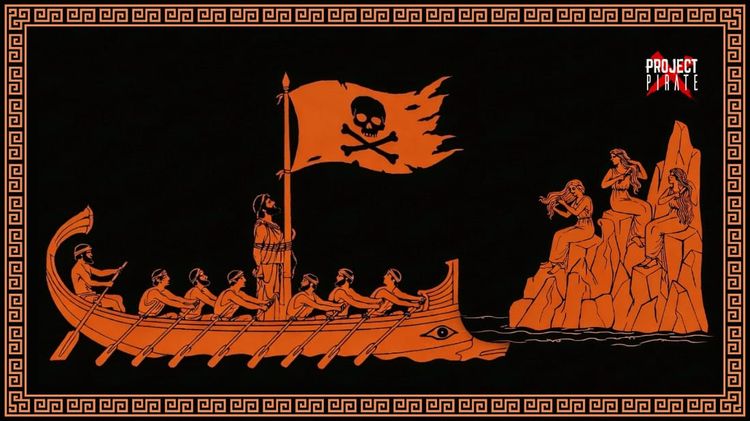
But there is another figure in this voyage who rarely gets a point of view, only a set of behaviours we find inconvenient. He is not on the deck. He is the investor who paid for the voyage, standing at the harbour or watching from a cabin window, waiting for cargo he financed but cannot see and cannot touch. He does not feel the wind change. He experiences the voyage through someone else's eyes.
We call this behaviour irrational and mostly leave it there. The changed mind, the demand for a date nobody can honestly give, the pressure that seems to be negotiating with reality rather than accepting it. But irrational is only a word for behaviour we have not yet found the right frame for. And the frame, oddly enough, might be a 1960s Engelbert Humperdinck song about a man who cannot make his love arrive any faster by wanting it more.
Quando, Quando, Quando. "When, When, When". It is not a demand. It is a plea from somewhere past the reach of control.
And it is worth asking why someone so experienced is reduced to pleading at all. The answer is usually the same one: he has already promised this cargo to someone else. To his own board, his own peers, the room he sits in when the delivery team is not there to soften the account. His reputation is now underwritten by a thing he cannot inspect, built by people he must trust, arriving on a date nobody will confirm. That is not a comfortable position for anyone, least of all a person whose career has, until now, been built on being the one who delivers rather than the one who waits.
The Demand for a Date, or The Longing
When a sponsor asks for a delivery date before discovery has finished, the Crew hears micromanagement. Sit with him at the cabin window instead, and it reads differently. He is not trying to pin down the Crew. He is trying to find an anchor for his own anxiety in a landscape that offers him none.
In the song, 'tell me when will you be mine', it is worth noticing that the singer is not asking for a plan. He is asking for certainty, which is a different request entirely, and one no honest Captain can fully grant this early in a voyage. The sponsor knows this, somewhere. He asks anyway, because the asking is the only action available to a man who has handed over the wheel and kept none of the reassurance for himself.
Every moment's a day.
Every day, it seems like a lifetime.
The song does not ask for a schedule. It asks, repeatedly, for a single word of certainty, delivered as though the asking itself might hurry the answer along. And it describes something else worth noticing: time stops behaving normally under that kind of waiting. A short moment stretches to the length of a full day. A single day stretches to something closer to a lifetime. That is not hyperbole so much as an accurate description of what waiting on an outcome you cannot control actually feels like from the inside.
The Changing of Minds, or The Moving Horizon
When a sponsor changes scope mid-voyage, the Crew calls it recklessness. Seen from the cabin window, it often looks more like a man watching the market shift while his own ship is still in port. The longer the crossing takes, the more he wonders whether the cargo will still be worth anything by the time it lands. Scope does not change because he is fickle. It changes because time at sea is time the horizon spends moving without him.
This is not a comfortable pattern for a delivery team to absorb, and it should not need to be. But it is a more useful pattern to understand than the alternative, which is to write him off as someone who does not know what he wants.
The Sponsor Who Pines
He signed the Charter eighteen months ago in front of the Board, and told them it would change everything. He believed it. That is the part nobody remembers, later, when it matters.
Since then he has sold the vision at every steering committee, every skip-level, every corridor conversation that mattered more than the meeting it interrupted. He has spent credibility the way the project has spent budget. Freely, and on the promise of return.
He does not sleep well anymore. He rehearses the numbers before he has seen them. He tells himself the benefits will land this quarter, and if not this quarter, the next, and he has told himself this enough times that the telling has started to feel like the plan itself.
Nobody above him asks softly anymore. The questions have edges now. Where is the return. Where is the thing you promised us it would become. He answers, still, because the alternative is admitting he has had no new answer for two reporting cycles running.
He is not lying. He is pining. There is a difference, though it does not show up on a dashboard.
When, when, when. Not said aloud. Said in the gap before he opens the benefits tracker each Monday. Said in the silence after he tells the room "on track" for the fourth month running, meaning something closer to "must be."
He has become the last true believer in his own business case. Everyone else is waiting to see if he was right or merely convincing. He no longer knows which of the two he has been.
The Resolution
The answer to a pining sponsor is not a heavier Gantt chart. It is a better view. He does not lack detail. He lacks sight of the horizon, and no volume of governance paperwork has ever substituted for it.
The better answer is to invite him onto the deck.
Not permanently, and not operationally, but often enough that the voyage stops being an abstraction he has staked his name on and becomes something he can watch move.
But perhaps this is where the Crew and the investor quietly misunderstand one another at a deeper level than reporting cadence can fix.
The Crew thinks the voyage ends when the ship reaches harbour. The sponsor knows that is only the moment the cargo finally becomes his responsibility.
A project can be declared green, a release can go live, the Captain can log another successful crossing, and yet the investor is still waiting. Waiting for customers to adopt it. Waiting for operations to absorb it. Waiting for the business case to stop being a forecast and become an outcome.
He was never asking, "When will the project finish?"
He was asking, "When will what I bought finally become mine?"
Those are different questions. The first belongs to delivery. The second belongs to value.
Perhaps that is why so many conversations between sponsors and delivery teams feel as though they are spoken in different languages. One measures milestones. The other measures consequences. One celebrates arriving in harbour. The other knows the real voyage only begins when the cargo leaves the dock.
So the next time a sponsor asks, when?, it is worth listening for the question underneath. Not when will you finish? but when will the promise I sold become real? That is a harder question to answer. It is also the more honest one.
And perhaps that is why Quando, Quando, Quando has survived for more than half a century. It was never really about impatience. It was about waiting for something you have already committed your heart to, while knowing that wanting it cannot make it arrive any sooner.
Every sponsor knows that feeling.
Most delivery teams think they're answering a schedule.
They never realise they're listening to a love song.
Afterword: If you haven't heard Quando, Quando, Quando, spend four minutes with Engelbert Humperdinck before you leave. The article will read differently the second time.